
On this page
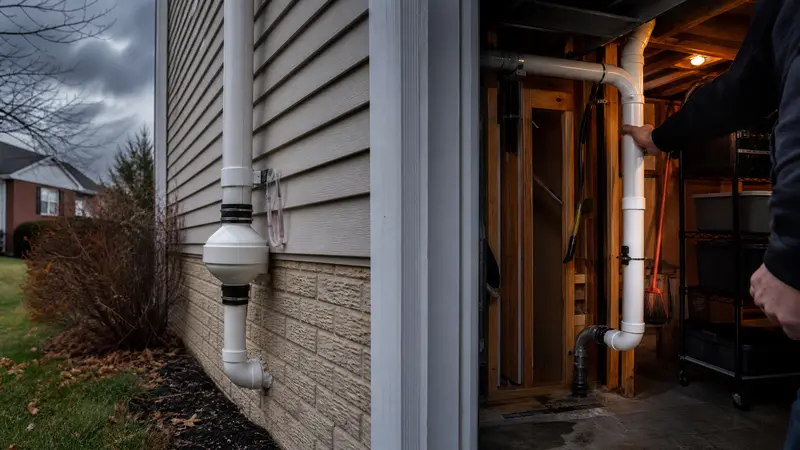
On a new radon mitigation system, the pipe can run up the outside of your house or up through the inside. Exterior routing goes out the basement wall and up the siding, and usually costs less. Interior routing goes through a closet or garage into the attic, hiding the pipe but taking more labor. Both work equally well at removing radon.
The two routes, explained
Every radon system starts the same way: a suction point in the basement slab. The difference is the path the pipe takes from there to its discharge point above the roof.
Exterior routing
The pipe leaves the basement through a hole in the rim joist or foundation wall, just above grade. Outside, it connects to the fan, which is mounted on the wall. From the fan, the pipe runs up the side of the house and past the edge of the roof.
Interior routing
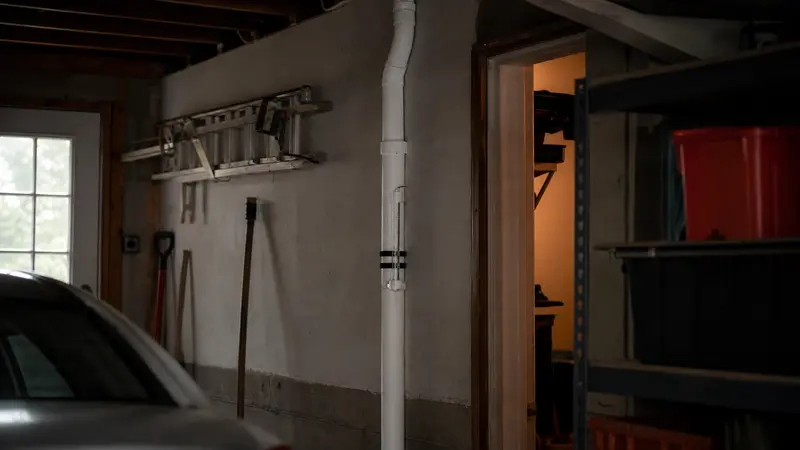
The pipe goes straight up from the basement through the house. It usually passes through a closet, a utility chase or an attached garage. In the attic, it connects to the fan, then goes out through the roof.
Side-by-side comparison
| Factor | Exterior route | Interior route |
|---|---|---|
| Cost | Usually lower | Usually higher, due to more labor |
| Install time | Often faster | Can add hours, cutting through floors |
| Looks | Pipe and fan visible on the siding | Mostly hidden; only a roof stack shows |
| Fan location | Outside wall | Attic or garage |
| Fan noise | Outside, away from rooms | In attic; can be heard if near bedrooms |
| Cold weather | Pipe exposed; condensation can freeze | Pipe stays warmer inside the house |
| Roof penetration | None, the pipe goes past the eave | Yes, needs proper flashing |
| Service access | Easy to reach the fan | Fan in attic can be harder to reach |
Pros and cons of exterior routing
Pros:
- Usually the lower-cost option because there is less cutting and patching.
- No holes through floors, closets or the roof.
- The fan is easy to reach if it ever needs to be replaced.
- Fan noise stays outside.
Cons:
- The pipe and fan are visible. Painting the pipe to match the siding helps.
- In cold weather, moisture in the soil gas can condense and freeze in an exposed pipe or at the outlet. Good installers slope the pipe and size it to limit this.
- The pipe has to clear gutters, windows and decks, which can force an awkward path on some houses.
Pros and cons of interior routing
Pros:
- The system is mostly hidden. From the outside you see only a vent stack on the roof, like a plumbing vent.
- The pipe stays warmer inside the house, so freezing is less of a concern.
- Works well when the side of the house faces the street or when an HOA limits what can be on the siding.
Cons:
- More labor, which usually means a higher price.
- Needs a clear path from the basement to the attic. A closet stacked above the suction point helps.
- Requires a roof penetration with flashing.
- A fan in the attic over a bedroom can sometimes be heard. Good mounting and isolation help.
What Pennsylvania rules say about either route
Both routes have to meet the same Pennsylvania mitigation standards. The pipe must discharge at least 12 inches above the roof and 10 feet or more above the ground. It must be 10 feet or more from operable windows, doors and other openings, unless it is 2 feet above the top of them. The fan cannot be installed in a basement, crawl space or any living space. Attics that are not used as living space, garages and the exterior are allowed.
Visible interior pipe also has to be labeled "Radon Reduction System" on each floor. You can find more on the PA DEP Radon Division site.
Which route fits a York home?
There is no single right answer. Here is how the choice often plays out:
- Older homes and rowhomes. Shared walls, tight lots and no attached garage often make an exterior route on the back or side wall the practical choice.
- Newer homes with an attached garage. Running the pipe up through the garage into the attic is often a clean, hidden option.
- Finished basements. The suction point location may decide the route. A spot near an unfinished utility room often leads to an exterior wall.
- Street-facing sides. If the only workable wall faces the street, many owners pay extra for interior routing.
Whichever route you choose, the system needs a manometer you can see and read. If you are not sure what the gauge is telling you, see radon manometer readings explained.
Questions to ask your installer
- Where will the suction point go, and why?
- Which route do you recommend for my house, and what is the price difference?
- Where will the fan be mounted, and how will you keep noise down?
- How will the pipe meet roof and window clearance rules?
- Can the exterior pipe be painted to match my siding?
Key takeaways
- Exterior routing is usually lower cost and keeps fan noise outside, but the pipe is visible.
- Interior routing hides the pipe and keeps it warmer, but takes more labor.
- Both routes work equally well at removing radon.
- Pennsylvania rules set the same discharge and fan location limits for both.
- Your foundation, lot, garage and finished spaces often decide the best path.
Frequently Asked Questions
Is an interior radon system better than an exterior one?
Not for radon reduction. Both can work equally well. The choice comes down to cost, looks, noise and what your house layout allows.
Can a radon fan be installed in the attic?
Yes, if the attic is not used as living space. Pennsylvania rules do not allow fans in basements, crawl spaces or living areas.
Can I paint an exterior radon pipe?
Yes. Many owners paint PVC pipe to match their siding using a paint made for plastic. Leave the fan label and any warning labels visible.
Plan your system route
The right route depends on your house, and we will walk through the options with you on site. Call (717) 356-3035 any time for a free written quote and a same-day callback.