
On this page
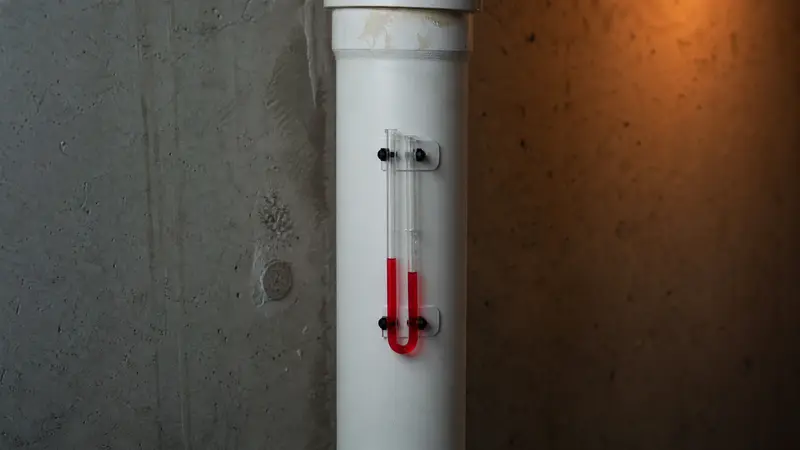
The U-tube manometer on your radon pipe shows whether the fan is creating suction. When the system is working, the liquid sits higher on one side than the other. That uneven level is normal. If the liquid is level on both sides, reading zero, the fan is not pulling suction and the system needs a check from a radon mitigation system installer.
What a radon manometer is
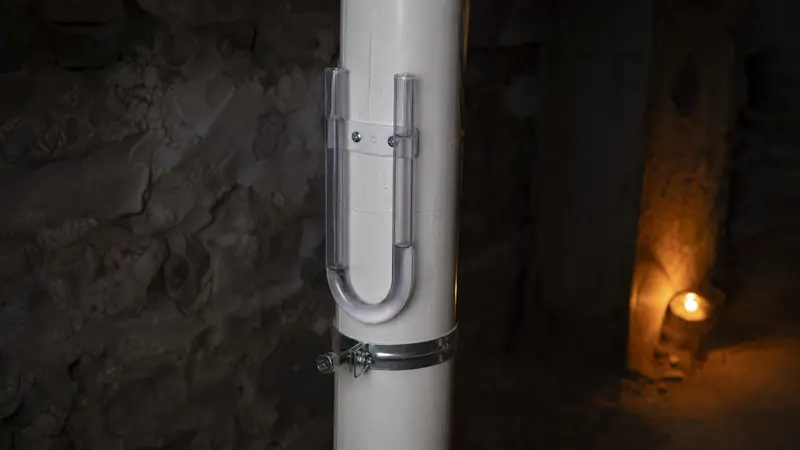
A manometer is a simple pressure gauge. On a radon system, it is a clear U-shaped tube mounted on the vent pipe, usually in the basement near where the pipe leaves the slab. It is filled with colored liquid and has a scale marked in inches of water column.
One end of the tube connects to the inside of the radon pipe through a small hole. The other end is open to the room. When the fan pulls suction on the pipe, it pulls the liquid up on the pipe side. The difference in height between the two sides shows how much suction the fan is creating.
Pennsylvania standards require every active radon system to have a device like this that shows fan performance and is easy to see and read. Most systems use a U-tube because it has no moving parts and needs no power.
How to read it
- Find the two liquid columns. Look at the top of the liquid on each side of the U.
- Check if they are level. If both sides are at the same height, the system has no suction.
- Read the difference. Many gauges have a sliding scale. Set zero at the lower side and read the number at the higher side. Others are marked so you read each side and add them.
- Compare to the install reading. Many installers mark the starting reading on the gauge or the label. That is your baseline.
What a normal reading looks like
A normal reading is any steady, uneven level close to the one marked at install. There is no single correct number for every house. A home with loose gravel under the slab may show a small number, because air moves easily. A home with tight soil may show a larger number, because the fan works harder to pull air through.
The number does not tell you your radon level. It only tells you the fan is pulling. The only way to know your radon level is a test.
Small changes are normal too. The reading may shift a bit with the seasons, as soil moisture and frost change how air moves under the slab.
What it means when the reading is zero
If the liquid is level on both sides, the fan is not creating suction. Common causes include:
- The fan is off. Check the switch near the fan and the circuit breaker. A tripped GFCI outlet is a common cause.
- The fan has failed. Radon fans run 24 hours a day and wear out eventually. A failed fan is a common reason for a zero reading on an older system.
- The pipe is disconnected or cracked. A joint that has come apart or a cracked pipe lets the fan pull outside air instead of soil gas.
- The manometer tubing came loose. If the small tube pops off the pipe, the gauge reads zero even if the fan is fine.
If you check the power and the tubing and the reading is still zero, the fan likely needs to be replaced. Our radon fan replacement in York service covers diagnosing and swapping failed fans. Until the system is fixed, radon can build back up in your home.
What it means when the reading changes a lot
Reading much higher than before
A sudden jump can mean something is blocking airflow. Possible causes are water collecting in a low spot of the pipe, ice at an exterior outlet in winter, or debris in the pipe. Soil that is very wet or frozen can also raise the reading for a while.
Reading much lower than before
A drop that is not all the way to zero can point to a weak or failing fan, a leak in the pipe, or a new opening in the slab, like a crack or a sump lid that was moved. Air leaking in through an open sump or a large crack lets the fan pull basement air instead of soil gas. Sealing helps the system pull from the soil. See does sealing cracks reduce radon for how sealing supports a fan system.
Other gauges and alarms
Some systems use a different monitor:
- Dial gauges that show suction with a needle.
- Audible alarms that sound when suction drops.
- Continuous radon monitors that show your actual radon level on a screen.
A digital radon monitor tracks your radon level, not just the fan, so it can warn you of a change. The EPA's radon page has more on testing.
How often to check it
A quick glance once a month is enough for most homes. Also check it after power outages and big storms. The EPA suggests retesting your home at least every two years, even when the gauge looks fine.
Key takeaways
- The manometer shows fan suction, not your radon level.
- Uneven liquid is normal and means the fan is pulling.
- Level liquid (zero) means no suction: check power, tubing and the fan.
- Big jumps or drops can point to blockages, leaks or a failing fan.
- Check it monthly and retest your home at least every two years.
Frequently Asked Questions
Should I adjust my radon manometer?
You can slide the scale to zero it for an easy reading, but do not refill or open the tube. If the liquid is low or missing, have the gauge serviced.
Can a manometer read zero if the fan is running?
Yes. A loose manometer tube, a disconnected pipe joint or a large leak can cause a zero reading even with the fan on.
Is a high manometer reading bad?
Not by itself. Tight soil can cause high readings. A sudden rise compared with your baseline is the thing to watch.
Need help with your system?
If your gauge reads zero or looks off, we can check it. Call (717) 356-3035 any time for a same-day callback.