On this page
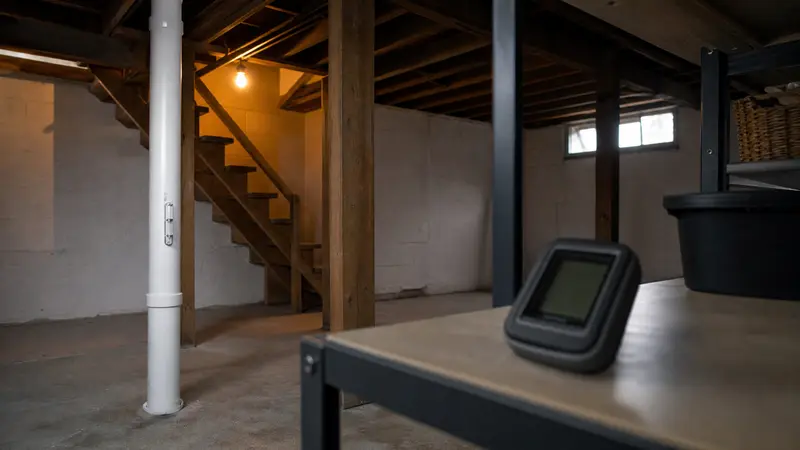
For accurate radon testing, place your test in the lowest lived-in level of your home, at least 20 inches above the floor. Keep it away from drafts, exterior walls, windows, doors, sump pits, fans and humid rooms like kitchens, bathrooms and laundry rooms. Leave it in one spot where it will not be moved for the full test.
Pick the right level
The EPA says to test in the lowest lived-in level of the home. Radon comes up from the soil, so levels are usually highest closest to the ground.
- Finished basement you use: test there.
- Unfinished basement you could use: for a home sale, testers usually test the lowest level that could be lived in, which often means the basement.
- No basement (slab or crawl space): test on the ground floor.
- Split-level or a home with an addition: different foundations can have different radon levels, so you may need more than one test.
PA DEP notes that radon levels are often highest in the basement, but they can be high on the ground floor too, even in homes without basements.
Pick the right room
Choose a regularly used room, such as a family room, playroom, den or bedroom. Avoid these spots:
- Kitchens. Cooking, exhaust fans and humidity can affect results.
- Bathrooms and laundry rooms. High humidity and exhaust fans can throw off some devices.
- Closets, cabinets and crawl spaces. These are not lived-in spaces and the air does not mix like a normal room.
- Sump pit areas. Air right next to an open sump can read far higher than the room.
- Furnace and utility rooms. Equipment can create drafts and heat.
Pick the right spot in the room
Industry testing standards set specific distances. Use these as your checklist:
| Rule | Distance |
|---|---|
| Height above the floor | At least 20 inches |
| From exterior walls | At least 1 foot |
| From windows and outside doors | At least 3 feet |
| From other objects | At least 4 inches |
| From heat sources, vents and fans | Keep well away |
| Direct sunlight | Avoid |
A table, shelf or dresser in the middle of a room usually works well. You can also hang some devices from the ceiling at breathing height.
Common placement mistakes
- Setting the kit on the floor. Air right at floor level is not what you breathe.
- Putting it by the sump pump. This can make a home look worse than it is.
- Placing it near a window you open. This can make a home look better than it is.
- Moving it halfway through. The test must stay in one place the whole time.
- Testing a room you do not use. The goal is to measure what you breathe.
Placement is only half the job
Even a perfectly placed test can give a bad result if windows are open. For short-term tests under four days, the house must be closed for 12 hours before the test and during it. Learn the full rules for closed-house conditions for a radon test.
How certified testers handle placement
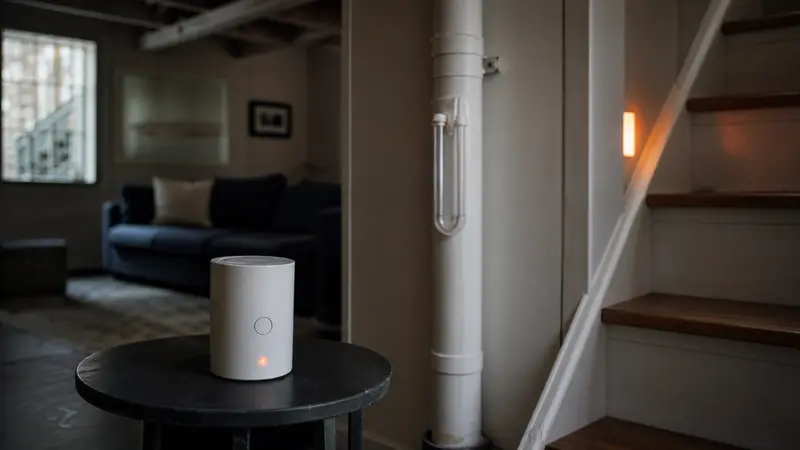
In Pennsylvania, anyone who tests radon in another person's home must be certified by PA DEP. Certified testers follow written placement rules and record the exact location on the report. That record matters in a home sale, because both sides can see where the test was run.
Placement in York homes
Many York homes are older, with stone foundations, block walls and basements of mixed use. Some have a finished room on one side and a dirt-floor crawl space or old cellar on the other. In homes like these, the tester may need more than one device to get a fair picture, and the crawl space itself is not the test spot.
Key takeaways
- Test in the lowest lived-in level.
- Set the device at least 20 inches off the floor.
- Stay 1 foot from exterior walls and 3 feet from windows and outside doors.
- Avoid kitchens, bathrooms, laundry rooms, closets and sump areas.
- Do not move the test once it starts.
Frequently Asked Questions
Can I put a radon test in a bedroom?
Yes, if it is on the lowest lived-in level. A bedroom is a good choice because you spend many hours there.
Should I test upstairs too?
If your lowest level tests high, the upper floors may still have radon. An extra test upstairs can help you understand exposure, but the lowest level decides whether you need a fix.
Let a certified tester set it up
If you want the placement done right the first time, book radon testing in York, PA. Call (717) 356-3035 any time for a same-day callback.