
On this page
Yes. A radon fan should run all the time, day and night, all year. The system works by keeping steady suction under your slab. When the fan stops, that suction is gone and radon can start building back up within hours, so a fan that will not stay on needs radon fan repair or replacement. Radon fans are built for continuous duty and use about as much power as a light bulb or two.
Why a radon fan needs to run continuously
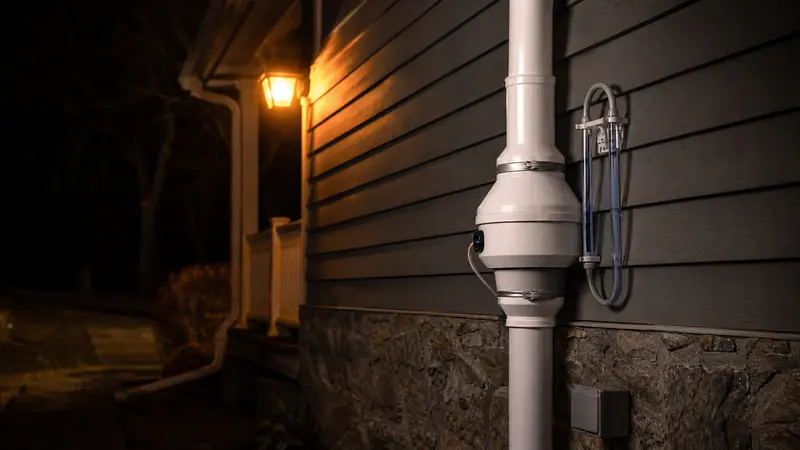
Radon is a gas that comes up from the soil and rock under your home. A radon system, often called sub-slab depressurization, uses a fan to create lower air pressure under the floor than inside the house. Soil gas then flows into the pipe and out above the roof instead of into your basement.
That pressure difference only exists while the fan is running. Turn it off, and the soil gas goes back to seeping in through cracks, joints, sump pits and other openings.
What happens when you turn it off
Radon levels do not drop to zero and stay there. They depend on the system working every hour. Once the fan stops, levels can begin climbing toward where they were before the system went in. How fast depends on your home, the soil and the weather, but it can start within hours.
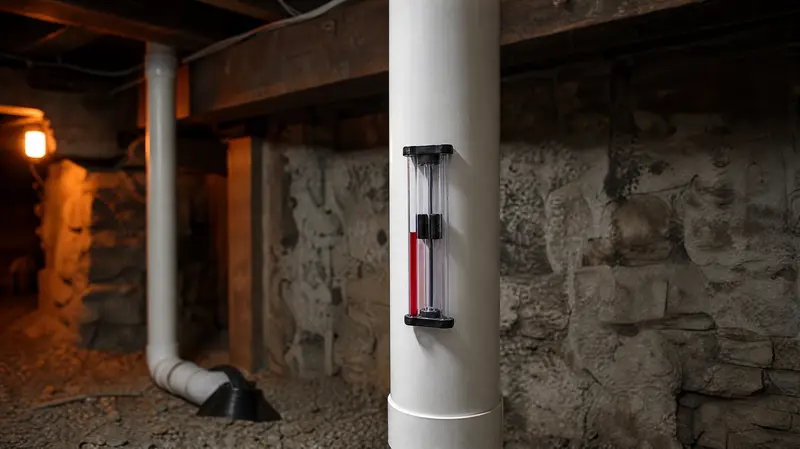
That is why recognized standards require a warning device, such as a manometer (U-tube gauge) or an alarm, and require the fan to be on a circuit that is not controlled by a wall switch.
How much does it cost to run?
Radon fans use far less power than most people expect. RadonAway's published specs list the popular RP145 at about 41 to 72 watts. Smaller models use less, and high-suction fans use more.
Here is a simple example. A fan drawing 60 watts all year uses about 526 kWh. At 15 cents per kWh, that is about $79 a year. Your real cost depends on your fan and your electric rate. EPA notes that fan systems "will slightly increase your electric bill."
Radon fans are made for continuous duty
Radon fans are not like bathroom fans. They are rated for continuous duty and built to handle damp soil gas. RadonAway's RP series motors also have thermal protection that shuts the motor off if it overheats.
The fan has no on/off timer for a reason. Running it on a schedule would leave hours each day where radon can build back up.
When the fan shuts off by itself
If your fan keeps stopping, something is wrong. Common causes include:
- A tripped breaker or GFCI outlet.
- A fan that overheats and trips its thermal cutout.
- A failed motor or worn bearings.
- A loose wire or damaged cord.
Check the manometer. If the liquid is level, the fan is not pulling suction. Our guide on radon fan not working: troubleshooting walks through what to check.
Can you ever turn it off?
Only for short service work, such as replacing the fan or fixing a pipe. A certified mitigator will turn it back on and confirm the gauge reading before leaving. If your fan was off for a while, run a new radon test no sooner than 24 hours after it is back on.
York County is in EPA Radon Zone 1, the highest-potential group. See the EPA radon page for more background. In homes like ours, a fan that is off is a real gap in protection.
Key takeaways
- A radon fan should run 24 hours a day, every day.
- Turning it off removes the suction that keeps radon out.
- A typical fan uses about as much power as a light bulb or two.
- Radon fans are built for continuous duty.
- If your fan keeps shutting off, it needs repair.
Frequently Asked Questions
Should I turn my radon fan off when I go on vacation?
No. Leave it on. Radon still enters an empty house, and you want levels low when you get back.
Can I put my radon fan on a timer or switch?
No. Standards call for the fan to run on a circuit without a switch so it cannot be turned off by accident.
Does a radon fan run harder in winter?
The fan runs at the same speed, but winter conditions can draw more soil gas toward the house. Steady operation matters most in cold months.
Fan keeps stopping?
If your fan is off and won't stay on, we can help. We offer radon fan replacement in York for any brand of system. Call (717) 356-3035 any time for a same-day callback.