On this page
- How a radon credit at closing works
- How a seller-installed system works
- Side-by-side comparison
- When a credit makes more sense
- When a seller-installed system makes more sense
- How to protect yourself either way
- A quick note on cost
- Agents: set expectations early
- Key takeaways
- Frequently Asked Questions
- Need a quote for your negotiation?
A radon credit at closing is money the seller gives the buyer at settlement to pay for a radon system after the sale. The other common choice is seller-installed radon mitigation before closing, followed by a clearance test. A credit gives the buyer control and less time pressure. A seller-installed system proves radon is fixed before move-in.
Neither choice is right for every sale. Here is how they compare and when each one tends to work best.
How a radon credit at closing works
After a high radon test, the buyer asks for a credit in a written corrective proposal during the inspection contingency. The amount is usually based on a written quote from a PA DEP-certified mitigator. If the seller agrees, the credit shows up on the settlement statement. After closing, the buyer hires an installer and pays for the system.
Watch for lender limits. Many loan programs cap how much a seller can contribute toward a buyer's closing costs. If the buyer is already getting other seller help, a radon credit may push past that cap. In that case, a price reduction may be used instead. For example, Fannie Mae caps seller contributions on a primary home at 3%, 6% or 9% of the lower of the price or appraised value, depending on the down payment. FHA loans allow up to 6%. VA loans limit certain seller concessions to 4%, not counting normal closing costs. The buyer's lender can confirm what applies.
How a seller-installed system works
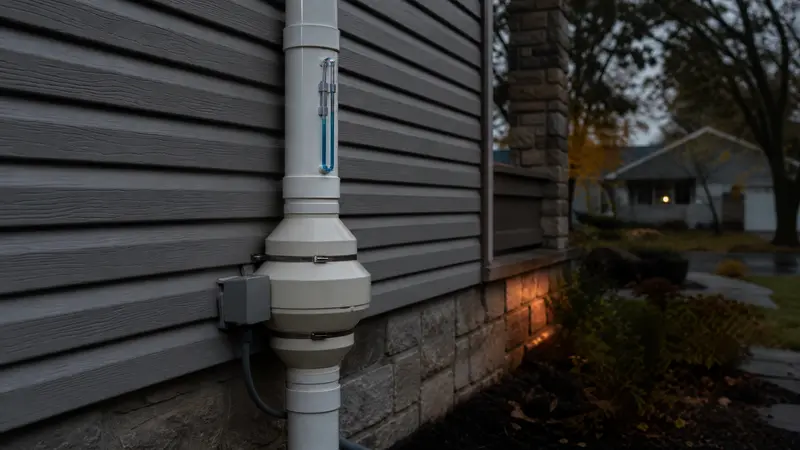
The seller hires a certified mitigator before settlement. The system goes in, usually in one day. After at least 24 hours of operation, a clearance test of at least 48 hours shows whether the level is below 4.0 pCi/L, the EPA action level. The seller sends the results and installer paperwork to the buyer and both agents.
Side-by-side comparison
| Factor | Credit at closing | Seller-installed system |
|---|---|---|
| Who chooses the installer | Buyer | Seller |
| Proof radon is fixed at closing | No | Yes, if retest finishes |
| Risk of closing delay | Low | Some, if scheduling slips |
| Buyer controls pipe routing and fan location | Yes | Limited |
| Lender contribution limits | May apply | Usually not an issue |
| Buyer's cash out after closing | Yes, covered by credit | None |
| Seller's cost certainty | Fixed credit amount | Fixed written quote |
When a credit makes more sense
- Settlement is close. If closing is days away, there may not be time for install plus retest.
- The buyer wants control. Some buyers care where the pipe runs, how the fan looks or which installer does the work.
- The buyer plans other work. If the buyer is finishing the basement or adding on, it can make sense to design the system around those plans.
- The seller is out of the area. A credit avoids coordinating access and contractors from a distance.
When a seller-installed system makes more sense
- The buyer wants proof first. A passing clearance test before closing removes uncertainty.
- There is time. Several days to two weeks before settlement is usually enough.
- Lender limits are tight. A seller-installed system avoids adding to seller contributions.
- The seller wants a clean file. Fixing the issue now means fewer questions from future buyers or appraisers.
How to protect yourself either way
If you take a credit (buyers)
- Base the number on a written quote, not a guess.
- Book the install soon after you move in. The credit only helps if the system gets installed.
- Use a PA DEP-certified mitigator and ask for a clearance test.
If the seller installs (buyers)
- Ask for a certified mitigator by name in the agreement.
- Require a clearance test below 4.0 pCi/L before settlement.
- Get copies of the installer's certification number, system details and any written guarantee.
If you are the seller
- Get a written quote right away so you can compare a credit with installing.
- Pick an installer who guarantees the clearance result in writing. That limits your risk if the first retest is high.
A quick note on cost
Pennsylvania cost guides commonly cite roughly $800 to $2,500 for a standard system in an existing home. A written on-site quote sets the real number, and both a credit and a seller-installed system should be based on that quote.
Agents: set expectations early
Agents can save everyone time by explaining both options before the radon test results come in. Our radon guide for York real estate agents covers test timing, contingency language and how to keep the closing on schedule.
Key takeaways
- A credit gives the buyer control and avoids closing delays.
- A seller-installed system gives proof that radon is fixed before closing.
- Lender limits can affect how large a credit can be.
- Base either option on a written quote from a certified mitigator.
- Choose based on time to settlement and how much control the buyer wants.
Frequently Asked Questions
How much is a typical radon credit?
It is usually based on a written quote for the specific home. Credits vary with the foundation, pipe routing and starting radon level.
Can the buyer and seller split the cost?
Yes. Some deals split the cost of a system or a credit. Anything both sides agree to in writing can work.
Need a quote for your negotiation?
We provide free written quotes that work for either a credit or a seller-installed system. Call (717) 356-3035 any time for a same-day callback.