
On this page
A crawl space dehumidifier does not remove radon. It pulls water out of the air, but radon is a gas that passes right through it. A dehumidifier is a moisture tool. To lower radon, you need crawl space radon mitigation: suction under a sealed membrane. The two work well together in an encapsulated crawl space, each doing its own job.
What a crawl space dehumidifier does
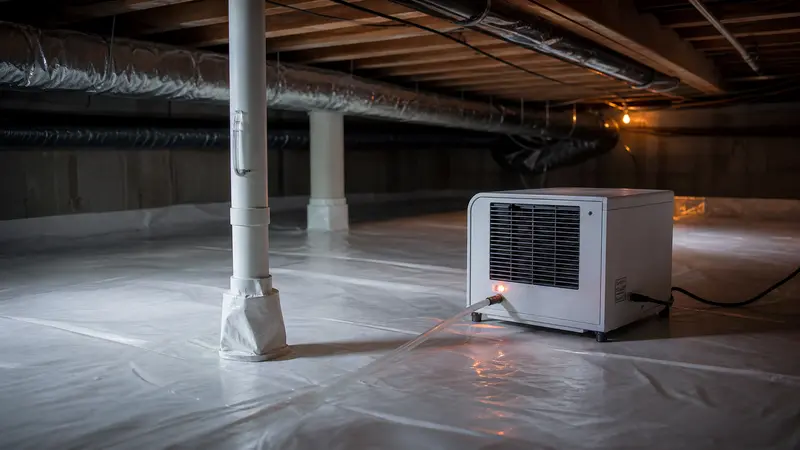
A dehumidifier draws in air, cools it to condense the moisture, drains the water and sends drier air back out. In a sealed crawl space, it keeps relative humidity low enough to discourage mold, musty smells, wood rot and pests.
Crawl space dehumidifiers are built for the job. They tend to be compact, rated for cooler temperatures and set up to drain to a pump or floor drain.
Why it does not lower radon
Radon is a radioactive gas, not water vapor. It does not condense in the coils and does not stick to filters. Air goes in with radon and comes out with radon.
A dehumidifier also does nothing about where radon comes from. Soil gas keeps flowing up from the ground. Only an approach that stops or redirects that flow, like sub-membrane depressurization, brings levels down reliably.
How the two systems fit together
In a full crawl space package, each part has a role:
| Part | Job | Lowers radon? | Controls moisture? |
|---|---|---|---|
| Sealed membrane | Covers the soil | Slows it | Yes |
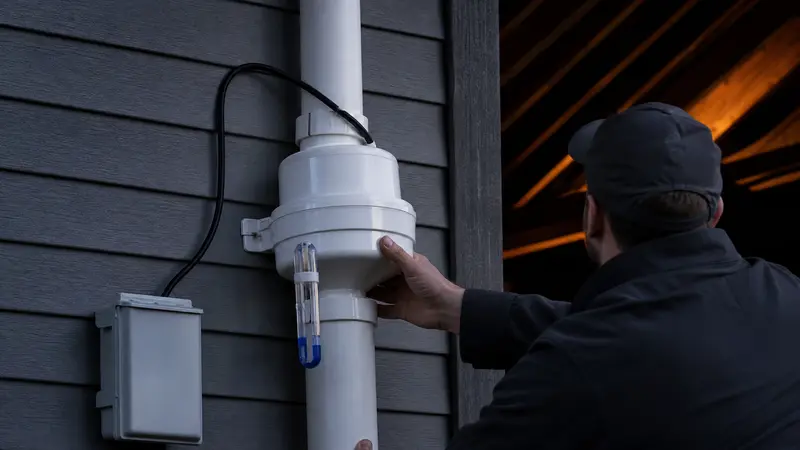
| Suction pipe and fan | Pulls soil gas from under the membrane | Yes | Some |
| Sealed vents | Keeps humid outside air out | No | Yes |
| Dehumidifier | Dries the crawl space air | No | Yes |
The membrane and fan handle radon. The sealed vents and dehumidifier handle moisture. Together they give you a dry crawl space with low radon.
Does the radon fan help with moisture?
A little. The fan pulls air from under the membrane, and that air carries some soil moisture out through the pipe. Small leaks in the membrane also pull a bit of crawl space air into the pipe. Some homeowners notice the crawl space feels drier after a radon system goes in.
That effect is usually not enough to replace a dehumidifier in a sealed crawl space, especially in a humid summer. If moisture is a real problem, plan for both.
Order of work
If you are doing both radon and moisture work, this order tends to work best:
- Test for radon.
- Lay and seal the membrane, with the suction point placed under it.
- Install the radon fan and pipe, and confirm suction.
- Seal the vents and install the dehumidifier.
- Run the radon clearance test no sooner than 24 hours after the fan starts and within 30 days.
Doing the membrane once, with the suction point under it from the start, avoids cutting into a new liner later. For a full walkthrough of how the membrane and suction work, see sub-membrane depressurization explained.
Watch the drain line
The dehumidifier's drain line and the radon membrane need to get along. If the drain line runs through the membrane, it should be sealed where it passes through. If the dehumidifier drains to a sump pit, that pit should have an airtight radon cover with sealed fittings, since an open pit is a direct radon path.
York crawl spaces
York's humid summers are why so many local crawl spaces get musty, and why dehumidifiers are a common add-on. York County is also in EPA Radon Zone 1. If you are drying out a crawl space here, test for radon too. The EPA radon page explains how. In Pennsylvania, radon systems must be installed by a PA DEP certified mitigator.
Key takeaways
- A dehumidifier removes moisture, not radon.
- Radon needs a sealed membrane with suction and a fan.
- The radon fan may dry the crawl space a bit but rarely replaces a dehumidifier.
- Plan both systems together so the membrane is sealed once.
- Seal drain lines and sump covers so they do not leak radon.
Frequently Asked Questions
Can an air purifier in the crawl space remove radon?
No. Common air purifiers do not remove radon gas. Treat the source with suction.
Will a dehumidifier make my radon test inaccurate?
No. It does not affect the gas. Follow normal closed-house test conditions.
Do I need a dehumidifier after a radon system?
Only if you have a moisture problem. Many crawl spaces need one once vents are sealed.
Get radon and moisture handled together
We install crawl space radon systems and can plan the encapsulation and dehumidifier at the same time. See our crawl space radon mitigation in York, or call (717) 356-3035 any time for a same-day callback and a free written quote.